
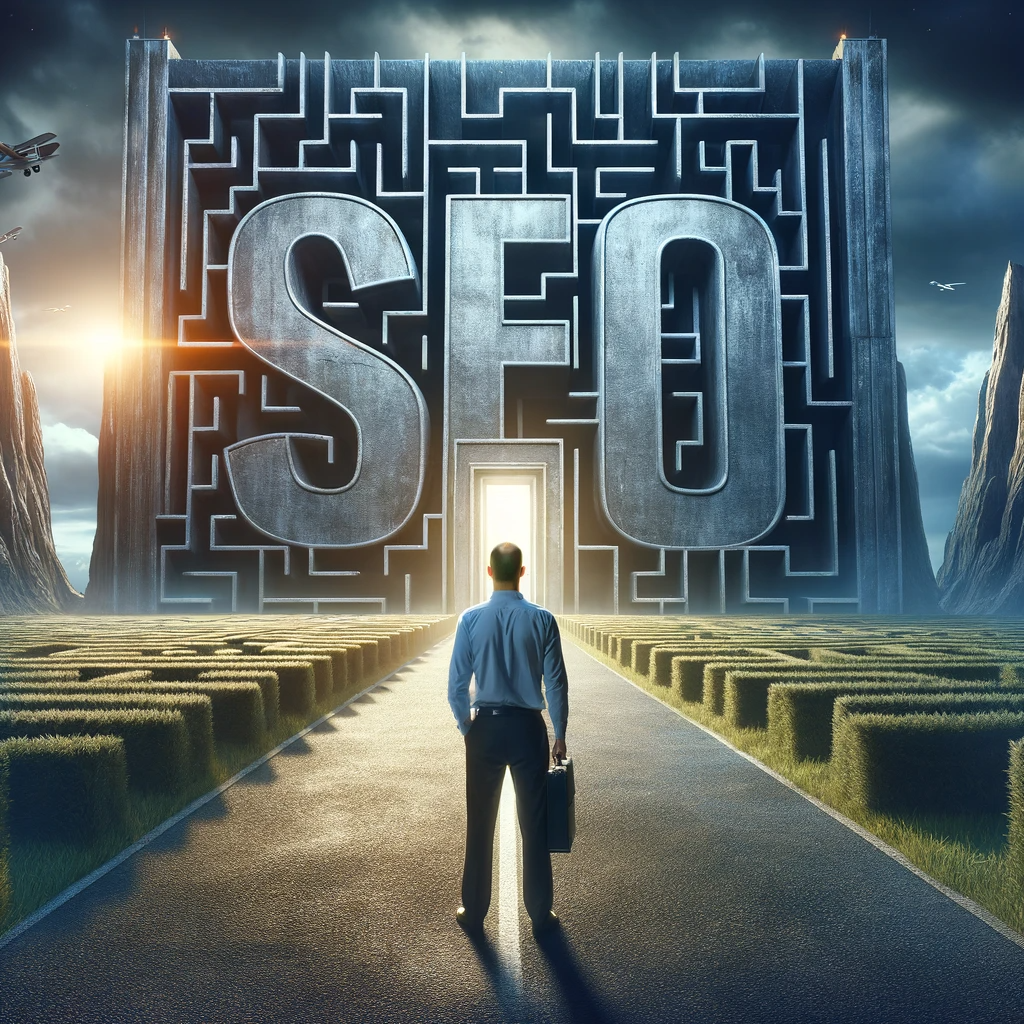
In the digital world, small businesses find themselves competing against the giants of business. This may seem like an unfair fight at first. But, there’s a relatively low-cost way to even out the playing field: Search Engine Optimization (SEO). Understanding and implementing effective SEO is no longer a luxury for the small business —it’s a necessity for survival and success.
Understanding SEO: Basics and Beyond
SEO is much more than just inserting keywords into your web pages; it’s a comprehensive strategy that involves aligning your online presence with the intricate workings of search engines.
Every element is significant, from crafting content that resonates with your audience and answers their needs, to obtaining high-quality backlinks from reputable, industry-related sites. This approach not only enhances the relevance of your content but also bolsters your site’s credibility in the eyes of search engines.
As search engine algorithms continually evolve to prioritize relevance and combat manipulative tactics, staying informed and adaptable is key. To understand these changes, take a look at the Key SEO Ranking Factors Confirmed for 2023, where the latest trends and updates are explored in detail.
This dynamic environment demands a balance between creativity and analytics, urging a constant reevaluation of strategies—from refining keyword usage to refreshing old content. It’s a field where staying updated and agile ensures that your business maintains robust online visibility, navigating the ever-shifting landscape of internet search with proficiency and insight.
The Impact of SEO on Small Businesses
SEO can indeed be a game changer for small businesses, leveling the digital playing field. Before diving into complex strategies, it’s critical to understand and implement the SEO foundations for success, allowing smaller enterprises to stand toe-to-toe with larger competitors by boosting their online visibility and attracting targeted traffic.
Through a well-executed SEO strategy, small businesses can significantly enhance their digital footprint, ensuring that when potential customers search for relevant products or services, their offerings appear prominently. This enhanced visibility is not just about being seen; it’s about being seen by the right people at the right time, which is crucial in converting online searches into actual business.
The real-world impact of SEO on small businesses is tangible and inspiring. Across various industries, there are countless success stories of small ventures that have harnessed the power of SEO to expand their reach, grow their customer base, and, in many cases, redefine their market position.
By focusing on relevant keywords, creating valuable content, and building a robust online presence, these businesses have not only increased their website traffic but also improved the quality of that traffic. This results in higher engagement rates, better conversion rates, and, ultimately, a stronger, more competitive business. Such stories underscore the transformative potential of SEO as a tool for growth and success in the competitive digital landscape.
Common SEO Challenges for Small Businesses
SEO can be daunting to small businesses dealing with limited resources and expertise. Budget constraints mean that hiring a dedicated SEO is not feasible. This often leaves business owners to juggle SEO with their daily operations. As a result, implementing SEO can be deprioritized.
This balancing act is especially challenging for startups or those in competitive industries, where effective online visibility is necessary yet hard to achieve without expert knowledge.
Additionally, the ever-evolving nature of SEO adds to the complexity. With search engines frequently updating their algorithms, keeping up with the latest trends and adapting strategies becomes a time-consuming task.
This continuous change demands a significant investment of time and effort, which can be overwhelming for small business owners who already have their hands full managing various aspects of their business. As a result, staying on top of SEO can feel like an elusive goal, leading to missed opportunities in strengthening their online presence.
Staying on top of SEO is going to become even more of a challenge with the introduction of AI. We have our first empirical research on how to optimize for visibility in AI which you can read about in my article Generative Engine Optimization: Maximizing Visibility in AI.
Practical SEO Strategies for Small Businesses
For the small business, there are practical strategies that can be implemented even on a tight budget. Local SEO, for example, is necessary to capture their nearby market. Ensuring that your website is mobile-optimized can be done by selecting a CMS that offers responsive themes. In addition, embracing the power of AI in SEO can offer a competitive edge. Discover how in my detailed guide on Leveraging ChatGPT and LLMs for SEO. Quality content tailored to your desired audience helps your business connect and engage on a more personal level.
For an extensive list of effective tools that can assist in these areas, check out my SEO Toolbox.
Measuring SEO Success
Tracking the success of your SEO efforts is essential. Key metrics like website traffic, search engine rankings, and conversion rates offer insights into what’s working and what’s not. To enhance your analysis, explore how ChatGPT can be utilized for data analysis in SEO, as detailed in my article ChatGPT Data Analysis for SEO.
Remember, SEO is a marathon, not a sprint. Unlike paid advertising, SEO results often take months to realize. Patience and persistence are key. Read my article “Understanding How Long SEO Success Really Takes” to learn more about how long it takes for SEO to work.
Conclusion
SEO is a vital tool for small businesses in the digital age. It’s about understanding your audience, delivering valuable content, and staying alert in an ever-evolving online landscape. By embracing SEO, small businesses can carve out their niche and thrive against bigger competitors.